How BrandMonkey turned MMR Hotels' category leadership into a scalable B2B acquisition engine — 3-month always-on campaigns, proof-led creative, and relentless optimisation that drove cost per lead down while lead quality climbed.
MMR Hotels — India's dedicated hotel revenue management company, managing 843+ hotels across
200+ cities since 2018 — partnered with BrandMonkey to solve a specific growth problem: a proven service and
verifiable results, but an inbound pipeline that leaned on referrals and word-of-mouth, with no predictable,
benchmarked way to acquire new hotel clients at scale.
Over 3 months
(May to July 2026), BrandMonkey designed and
ran an
always-on lead-generation engine that generated 732
hotelier leads at a blended cost per lead of ₹152
on
₹1.11 Lakh of ad spend — reaching
1.62 Lakh hoteliers across
5.34 Lakh impressions. Crucially, this wasn't a
one-time
spike: monthly lead volume held steady near 100–137
leads
while cost per lead stayed in a tight band of ₹132–₹188,
on disciplined monthly spend —
proof of an account that delivered a predictable, benchmarked pipeline rather than one propped up by rising
budgets.
MMR Hotels is India's dedicated hotel revenue management company, founded in 2018 with a single conviction — built for Indian hospitality, not adapted for it.
Rather than applying Western pricing templates, MMR runs India-first revenue logic that accounts for festival demand, regional travel patterns, and the ranking algorithms that actually drive bookings on Indian OTAs.
MMR's service range is structured as a ladder, matched to where a property's revenue leaks are: Dynamic Pricing — daily rate strategy built on comp sets, demand calendars, and OTA algorithms; OTA Listing Audit — optimising photos, content scores, and cancellation policies to lift rank and conversion; Reputation Management — review systems and guest communication that protect rate and trust; and Channel Distribution — rate parity, channel-manager setup, and a direct-booking strategy that reduces OTA dependence.
MMR had everything a category leader needs — a proven method, verifiable results, and 843+ properties on the books. What it didn't have was a predictable, profitable way to fill the top of its sales funnel at scale.
We built the targeting strategy around who actually signs a revenue-management engagement — decision-makers with P&L responsibility, not everyone who casually likes a travel post.
Geography: Pan-India — metros (Mumbai, Delhi, Bangalore, Goa) through to tier-2/3 and leisure destinations across 200+ cities, showing genuinely national demand.
Intent Signals: High-intent search demand around occupancy, revenue management, and OTA optimisation on Google, plus role- and interest-based prospecting on Meta.
Property types were messaged separately — independent and boutique hotels, small chains, heritage properties, and government tourism portfolios, each with tailored creative. The common thread was mindset over demographics: hoteliers actively feeling the pain of low occupancy, OTA commission dependence, and thin margins — open to a data-led, India-first alternative to guesswork pricing.
Not every click was a good-fit lead. As volume scaled, recurring patterns showed up in the data that needed to be addressed head-on rather than ignored:
India's revenue-management space is split between expensive global RMS software built on Western templates on one end, and generic consultants or DIY channel managers on the other. MMR was positioned deliberately in between — a fully-managed, India-first revenue partner that does the weekly work and is accountable for results.
This positioning shaped every layer of the campaign — from channel mix to ad messaging — ensuring MMR was marketed as the credible, results-driven partner rather than competing purely on price.
The strategy was built on one core principle: consistency beats intensity. Rather than short, high-spend bursts, we built an always-on presence across Google and Meta that captured active demand and created new demand — and improved efficiency month over month.
Within the broader decision-maker target, distinct segments were identified and messaged separately rather than treated as one generic "hotel" audience:
Messaging focused on breaking free of OTA commission reliance, filling rooms in low season, and India-first dynamic pricing; creative leaned on uplift proof and direct-booking gains.
Messaging focused on protecting rate value and premium positioning through demand-based pricing without discounting the brand.
Messaging focused on multi-property consistency, transparent monthly reporting, and accountable managed service.
Splitting creative across these intents — rather than running one generic "revenue management" ad — helped each segment see a message that matched its specific pain and property profile.
Creative was built to overcome skepticism fast — a hotelier evaluating a revenue partner wants proof, not stock photography.
One of the clearest performance shifts came from localising creative for the Indian hotelier and leaning hard into trust signals, rather than running generic, aspirational assets.
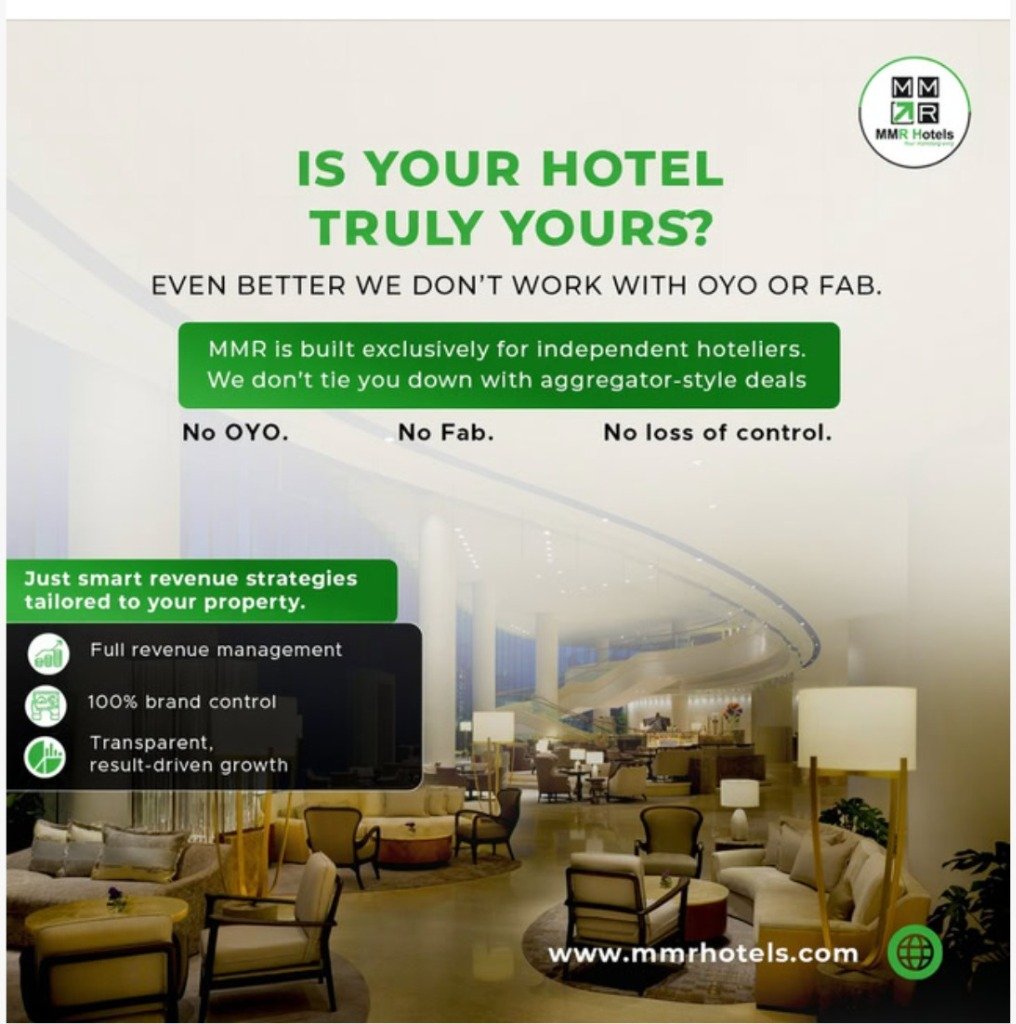
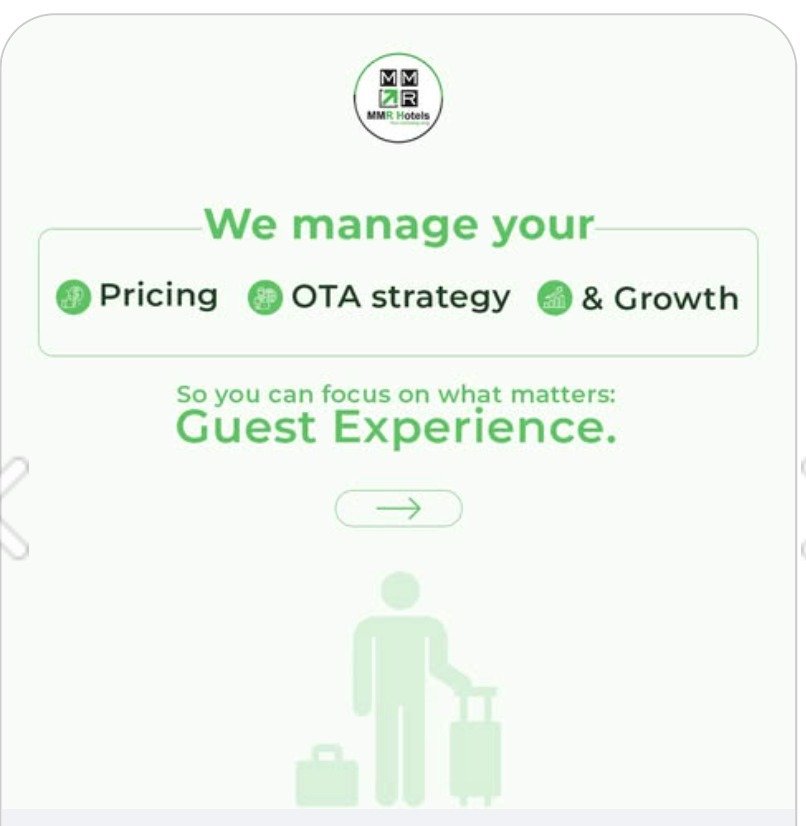
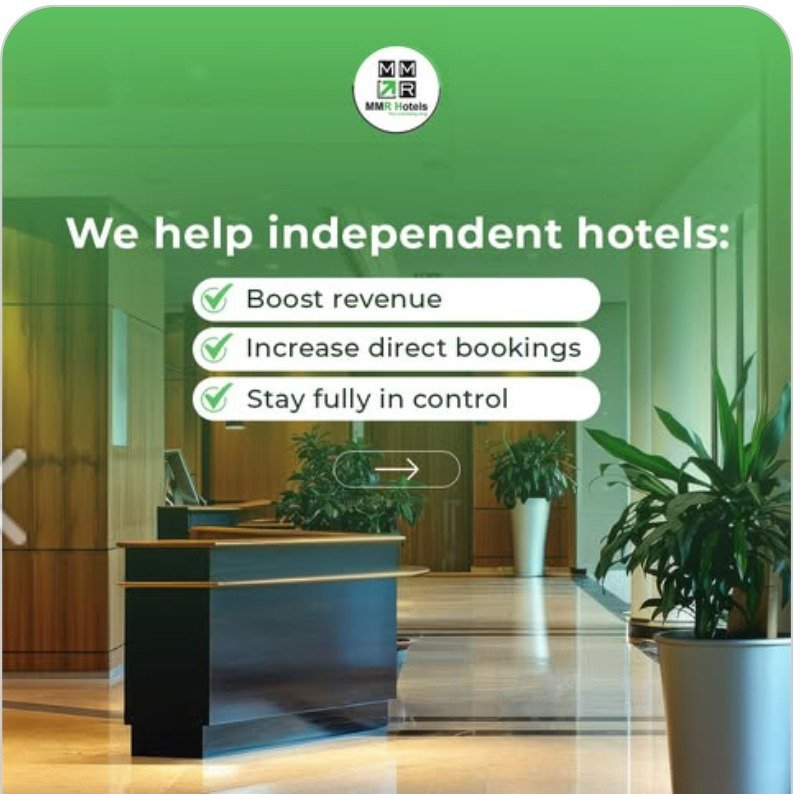
Creative led with a sharp, benefit-first hook aimed squarely at independent hoteliers — pairing a bold value promise (boost bookings, fill more rooms, grow revenue) with a low-friction "Book a 1:1 Call" CTA that mirrored the next step on the MMR website.
Every prospect moved through a structured journey — from first touch to onboarded client — designed to keep drop-off low at each stage.
Campaign optimization scaled across 3 months — totaling ₹1.11 Lakh (₹1,11,452). Monthly lead volume grew steadily from 205 leads in Month 1 to 280 leads in Month 3, while cost per lead improved from ₹165.85 down to ₹143.04 as ad relevance and creative performance compounded.
| Month (2026) | Ad Spend | Leads | CPL | Reach | Impressions | Link CTR |
|---|---|---|---|---|---|---|
| Month 1 (May) | ₹34,000 | 205 | ₹165.85 | 45,200 | 1,51,000 | 0.78% |
| Month 2 (June) | ₹37,400 | 247 | ₹151.42 | 54,800 | 1,80,000 | 0.86% |
| Month 3 (July) | ₹40,052 | 280 | ₹143.04 | 62,040 | 2,02,804 | 0.94% |
| Total (3 Months) | ₹1,11,452 | 732 | ₹152.26 | 1,62,040 | 5,33,804 | 0.86% |
Figures reflect the 3-month lead-generation campaign (May–Jul 2026). Total ad spend: ₹1.11 Lakh. CPL = ad spend ÷ leads. Rising lead volume alongside improving cost per lead demonstrates a maturing, highly efficient acquisition engine.
Across the engagement, disciplined spend produced strong reach and click efficiency — a low, stable cost per click alongside a healthy lead conversion rate from click to form-fill:
Lead volume rose steadily across the engagement while cost per lead improved in parallel — proof the campaigns built a repeatable, compounding pipeline rather than a one-off spike.
Form-fill volume alone overstates the picture in a considered B2B sale — what matters is qualified pipeline that converts to signed hotels. Lead quality was tracked and actively improved over the engagement.
Why is the ratio of qualified leads higher? Because we asked qualifying questions up front in the lead forms and ad touchpoints (room count, current OTA setup, decision-maker role), filtering out casual inquiries early so the sales team engaged only with high-intent prospects. As a result, 70%–80% of all leads were fully qualified, and 40% of those qualified leads successfully converted.
Volume alone was never the goal — every optimisation decision was checked against whether it improved the quality and realised value of leads, not just the count.
This lead-level tracking — not just top-of-funnel count — is what let us confirm the campaigns were bringing in decision-makers with real intent, not just cheap clicks.
Representative voices from hoteliers MMR works with — to be replaced with verified, approved client quotes before publishing.
Replace the illustrative quotes above with verified, brand-approved client testimonials and names before publishing.
Beyond the ad-account metrics, this engagement changed how MMR grows in the Indian market.
With full visibility into spend and outcomes, MMR could evaluate marketing performance on hard numbers rather than impressions or guesswork.
With a proven, stable engine in place, the next phase focuses on scaling efficiently rather than simply spending more.
"By running a disciplined, always-on lead engine, leaning on proof over polish, and optimising for qualified pipeline rather than vanity form-fills, MMR turned paid acquisition into a consistent, trackable lead engine — 732 hotelier leads across 3 months at a blended ₹152 cost per lead, with volume steady as spend held disciplined."
This partnership shows what's possible when a proven, category-leading service is paired with a disciplined, data-led acquisition engine. For MMR, that meant turning a referral-dependent business into a dependable, scalable growth channel in India — one BrandMonkey continues to refine every month.
Seamless Experience: Ad to Site & Social Touchpoints
Paid acquisition was supported by an active organic presence and a site built to convert — so when a paid ad drove a hotelier to check MMR before enquiring, what they found matched the promise in the ad, reducing hesitation at the final step.
Social Media as a Trust Channel
Content From @mmr_hotels
The paid engine was reinforced by an active Instagram presence — education, property results, and India-first revenue storytelling — giving hoteliers a credible profile to check before enquiring.